Evaluating Mechanical Differences Between a Used and Reconditioned Ford Mustang Engine — So You Get a Winner, not a Guess
July 9, 2026
Used vs Reconditioned Ford Mustang Engine: They Look Identical on Paper — Here's Why They're Not
Quick Answer
A used Ford Mustang engine and a reconditioned Ford Mustang engine may occupy the same search results, but they are not mechanically equivalent. A used engine is generally removed from a donor vehicle and sold after basic checks, while a reconditioned engine is dismantled, inspected, measured and rebuilt with replacement components where wear exceeds specification. For most UK drivers seeking dependable long-term ownership, a professionally reconditioned engine delivers better value despite the higher purchase price because it significantly reduces the likelihood of paying for labour twice.
They Look the Same on Paper—They're Not
Search online for a Replacement Ford Mustang Engine and you'll quickly discover dozens of suppliers advertising remarkably similar products. Every listing claim quality. Most mention testing. Many promise a warranty.
On paper, they appear interchangeable.
They are not.
This is the comparison many suppliers avoid because transparency makes price alone a poor sales argument. Two engines may fit the same vehicle and share identical specifications, yet their remaining service life, internal condition and long-term reliability can differ dramatically.
The biggest mistake buyers make is assuming that similar descriptions indicate similar engineering quality. In reality, the difference often becomes apparent only after installation, when a hidden internal fault results in excessive oil consumption, timing chain noise or premature bearing wear.
A second engine removal, replacement fluids, fresh gaskets and another installation can easily exceed £1,400, turning an apparently cheaper purchase into the most expensive decision.
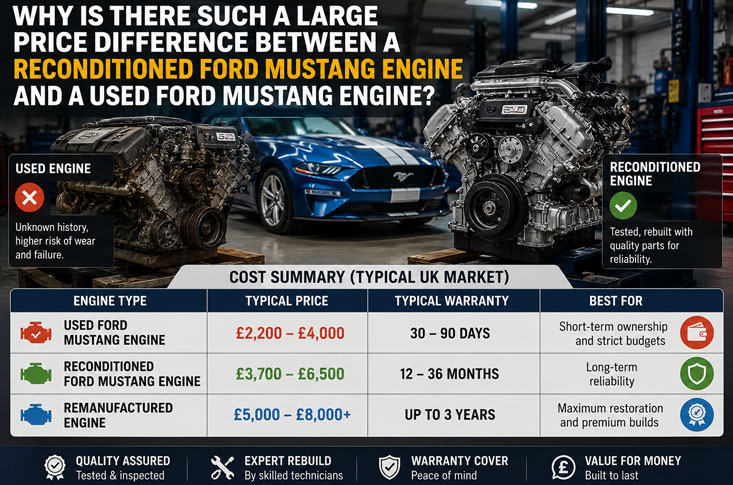
Cost Summary (Typical UK Market)
| Engine Type | Typical Price | Typical Warranty | Best For |
| Used Ford Mustang Engine | £2,200–£4,000 | 30–90 Days | Short-term ownership and strict budgets |
| Reconditioned Ford Mustang Engine | £3,700–£6,500 | 12–36 Months | Long-term reliability |
| Remanufactured Engine | £5,000–£8,000+ | Up to 3 Years | Maximum restoration and premium builds |
Is a Reconditioned Ford Mustang Engine Better Than a Used Ford Mustang Engine?
Yes—for most buyers, it is.
The reason has little to do with marketing and everything to do with mechanical condition.
A used engine retains every unknown variable from its previous life. Although compression may appear acceptable during a basic inspection, internal wear continues to exist. Bearings, piston rings, valve guides, seals and timing components may already be approaching the end of their service life.
A reconditioned engine follows a completely different process.
Instead of relying upon the donor vehicle's remaining lifespan, worn components are identified, tolerances measured and defective parts replaced before installation.
Side-by-Side Comparison
| Factor | Used Engine | Reconditioned Engine | Best For |
| Internal Strip Down | ✗ | ✓ | Buyers wanting confidence |
| Replacement Components | Limited | Extensive | High annual mileage |
| Machining | Rare | When required | Long-term ownership |
| Compression Testing | Basic | Before & After Rebuild | Reliability |
| Warranty | Limited | Longer | Peace of mind |
| Failure Risk | Higher | Lower | Daily driving |
| Consumer Rights | Applies | Applies | Equal legal protection |
Compression readings alone cannot reveal worn crankshaft bearings, timing chain stretch or microscopic fatigue inside rotating components. A used engine may pass every advertised test while still containing thousands of pounds' worth of future wear.
For most UK drivers covering 10,000–15,000 miles annually, a Reconditioned Ford Mustang Engine represents the stronger investment because the rebuild addresses known wear before the engine ever reaches the vehicle.
Why Is There Such a Large Price Difference Between a Reconditioned Ford Mustang Engine and a Used Ford Mustang Engine?
The purchase price reflects engineering effort rather than branding.
A used engine usually requires relatively little preparation before sale. Once removed from a donor vehicle, suppliers typically perform visual inspections, basic testing and cleaning before dispatch.
A reconditioned engine requires significantly more labour.
The engine is dismantled completely. Internal parts are cleaned, measured and inspected. Worn bearings, seals, gaskets and service items are replaced. Cylinder heads are checked for cracks, mating surfaces are measured and critical tolerances restored where necessary.
That labour costs money.
However, buyers frequently compare only the purchase price rather than the total ownership cost.
Replacing an engine twice almost always costs considerably more than buying the better product once.
Labour charges often exceed the initial price difference between a used and reconditioned engine. Saving £900 today can become a £2,000 mistake after six months.
How Long Will a Used Ford Mustang Engine Last Compared with a Reconditioned Ford Mustang Engine?
There is no universal mileage figure because every engine has experienced different driving conditions and maintenance histories.
A well-maintained used engine with verified service records can provide many years of dependable use.
Conversely, a neglected donor engine may develop serious issues shortly after installation despite appearing healthy during initial testing.
A professionally reconditioned engine reduces these uncertainties because critical wear components have already been inspected and renewed.
Typical expectations include:
- Used engine with excellent history: 50,000–100,000 additional miles.
- Average used engine: Highly variable.
- Professionally reconditioned engine: Frequently capable of mileage approaching original service life when maintained correctly.
The quality of the rebuild matters just as much as the fact that it has been rebuilt. A poorly reconditioned engine can perform worse than an excellent used engine, making supplier reputation every bit as important as engine type.
For motorway commuters covering 15,000 miles or more annually, the reconditioned option generally offers the lowest long-term ownership risk because predictable reliability becomes more valuable than initial savings.
Does Warranty Protection Differ Between a Used Ford Mustang Engine and a Reconditioned Ford Mustang Engine?
Yes.
Although both benefit from statutory consumer protection, contractual warranties often differ considerably.
Used engines commonly include shorter warranty periods with stricter exclusions relating to installation procedures, ancillary components or servicing requirements.
Reconditioned engines frequently provide longer warranty terms because suppliers possess greater confidence in the rebuilt components.
Regardless of engine type, buyers should confirm:
- Installation requirements.
- Oil specification.
- Cooling system replacement recommendations.
- Timing component conditions.
- Warranty exclusions.
- Claim procedures.
Many warranty disputes arise not because the engine failed, but because documentation proving correct installation cannot be produced.
Will a Reconditioned Ford Mustang Engine Affect MOT or Emissions Compared with a Used Engine?
Provided the replacement engine matches the vehicle specification and is installed correctly, neither option automatically changes MOT requirements or emissions classification.
However, engine condition influences emissions performance.
Excessive oil consumption, worn piston rings and poor combustion efficiency commonly found in neglected engines can contribute to higher emissions and MOT failures.
A professionally rebuilt engine often restores combustion efficiency by replacing worn sealing components and correcting internal wear.
Many post-installation emissions failures originate from neglected ancillary systems rather than the engine itself. Injectors, sensors and catalytic converters should always be assessed during replacement.
Frequently Asked Questions
Is a used Ford Mustang engine worth buying?
Yes, provided its mileage, history and testing are fully verified. It is generally best suited to older vehicles where minimising purchase cost is the primary objective.
Is a reconditioned Ford Mustang engine more reliable?
Generally, yes. Replacing worn components before installation significantly reduces the likelihood of early mechanical failures.
Why is a reconditioned engine more expensive?
Because skilled labour, inspection, machining and replacement components all increase production costs. Buyers are paying for reduced mechanical risk rather than simply a different label.
Which option offers better long-term value?
For most drivers intending to keep their Mustang for several years, a professionally reconditioned engine delivers better overall value despite its higher purchase price.
Should I choose the cheapest replacement engine available?
Price should never be the only consideration. Supplier reputation, warranty depth and documented rebuilding standards usually determine long-term satisfaction more than the invoice total.
Can a reconditioned engine perform like a new engine?
When rebuilt to manufacturer tolerances using quality components, many reconditioned engines deliver performance very close to original factory specifications.
Which engine should most UK Mustang owners buy?
For most UK drivers covering around 12,000 miles per year on mixed roads, a Reconditioned Ford Mustang Engine is the stronger choice because the higher purchase price is often offset by lower failure risk, improved warranty protection and reduced likelihood of paying installation costs twice.
Explore More About Ford Engines
- 1 Stop! Before Buying a Second-Hand Ford Transit Engine, Read This Urgent Expert Warning
- 2 Real Cost of a Ford Ranger Engine Replacement UK: What 30 Owners Told Us
- 3 Is a Reconditioned Ford Transit Engine Worth It? Real-World Costs, Lifespan & Owner Experiences
- 4 Finding a Trusted Replacement Engine Supplier Near Me: What to Ask Before You Buy a Recon Ford Focus Engine
- 5 Expert Insights: When a Reconditioned Ford Ranger Engine Is Better Than a Second-Hand Engine
Stop Choosing Blind—Compare the Engineering, Not Just the Price
The cheapest engine is not always the least expensive ownership decision. Understanding exactly what has been inspected, rebuilt and covered by warranty allows you to compare engines on engineering quality rather than marketing claims. If you're investing in a replacement engine, request detailed rebuilding information, written warranty terms and documented testing before making your final decision. Those few extra questions today could save thousands in unnecessary repairs tomorrow.
Written by John Miller | Dedicated ET Automotive Writer & Mechanic.
Categories
- Uncategorized
- Audi Engines
- BMW Engines
- MINI Engines
- Volkswagen Engines
- Replacement Car Engines in UAE
- Infotainment System
- SUV
- Mercedes Benz Engines
- Citroen Engines
- Engine Care
- petrol engine
- petrol engines
- Citroen C3 Engines
- Ford Engines
- Land Rover Engines
- Jaguar Engines
- Range Rover Engines
- Nissan Engines
- Mazda Engines
- Iveco Engines
- Hyundai Engines
- Range Rover Sport Engines
- Vauxhall Engines
- KIA Engines
- Mercedes Engines
- Toyota Engines
- Hyundai i20 Engines
- Renault Engines
- Infographic
- SEAT Engines
- BMW 5 Series Engines
- Skoda Engines
- Euro NCAP
- Skoda Fabia Engines
- Suzuki Engines
- Fiat Engines
- Mitsubishi Engines
- Volvo Engines